
Exploring Buddhist archaeology in Xinjiang: bridging the past and future
Uncovering the shadowed facets of a "Buddhist Xinjiang"

Giuseppe Vignato
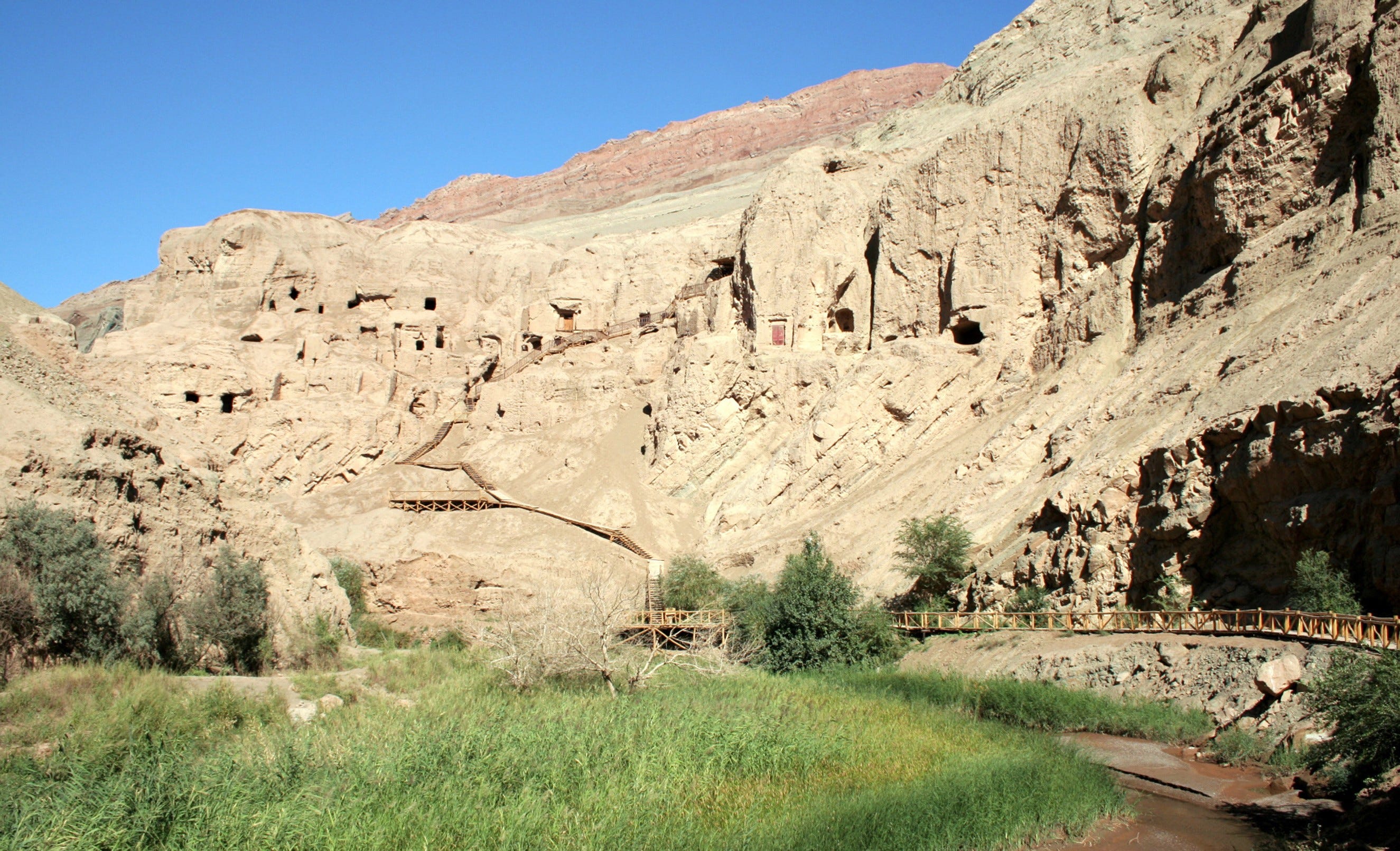
Xinjiang has always been a center of interest for the scholarly world. Over the years, China has made significant progress in Buddhist archaeology and related sciences, such as history, language studies and anthropology, through its archaeological work in the Buddhist sites of Xinjiang.
Xinjiang is a land rich in ancient remains that bear witness to its storied past. Many of the remains and archaeological tourist attractions are Buddhist sites; Buddhism prospered in Xinjiang for several centuries, especially in the area south of the Tianshan Mountain. While breakthroughs have been made in uncovering the shadowed facets of a "Buddhist Xinjiang," deciphering the unknown whole picture and complex cultural settings of Xinjiang's Buddhism still requires further efforts.
The Western discoveries
Between the end of the 19th century and the beginning of the 20th century, explorers from Russia, Prussia, Britain, France, and Japan conducted investigative diggings of Buddhist stupas and temples in central and western China. During that period, Xinjiang became a center of interest for the scholarly world, and a great amount of material still relevant today was published.
The scholars working in Xinjiang came from diverse countries, academic backgrounds, and had varied interests. Their study of the sites was also influenced by the nature of the remains. The area south of the Taklamakan was investigated mainly by Stein, whose focus was the unearthing of sand-buried settlements. Within these settlements, the best-preserved monuments were often Buddhist stupas and temples. North of the Taklamakan, the most visible remains were Buddhist caves and large cities with towering walls and buildings. The caves attracted more attention since they contained a wealth of well-preserved ancient art, of particular interest to art historians such as Grunwedel. The study of the paintings, sculptures, and other art objects brought a knowledge of the Buddhism practiced in the area, and of the peoples living in those kingdoms.
Different factors influenced the work of those scholars and explorers. The methodology they employed was in keeping with their background. Few were trained archaeologists, and working so far from their country of origin they had to adapt to whatever was available locally regarding transportation and manpower. Excavations were small in scale due to time limitations and carried out in a way that is deemed unscientific today. The collected material was not all classified; only "important" pieces were collected, and the mapping was excellent in some cases, and extremely poor in others. Some scholars were art historians, and focused on the art of the places; others were linguists and their interest focused on the recovery of ancient documents. Campaigns were long and complex: scholars had to spend a significant amount of time and effort traveling from their native countries to Xinjiang. Besides, their interaction with local authorities to obtain permission to work deserves further investigations.
The investigations carried out during the period revealed unknown facets of Xinjiang's history. The fact that these objects were set in museums in Europe and Japan stimulated much interest and produced lots of research. The publications, some of which showed a very high level of scholarship, generated a lively academic discussion in the West, and a growing interest in Central Asia and Xinjiang's history and art. Besides, an impressively large number of documents came to light, some written in previously unknown languages. These texts stimulated linguistic studies abroad, leading to a tradition of study that lasted for several generations. Some of the most renowned Chinese scholars greatly benefited from this academic tradition. In the past decade, many of these reports and studies, originally written in English, German, Russian, and other languages, have been translated into Chinese.
Earlier Chinese explorations
The work of the earliest explorers was just a first step in uncovering Xinjiang's past. Then it was the turn of Chinese scholars to visit and study the sites. Until the 1980s, their expeditions were infrequent; their research methodology was mostly interested in art, with limited attention given to architectural forms. The interest was still focused on individual monuments or specific aspects of the narrative content and décor. There was little effort and insufficient material to try to comprehensively understand the sites, and the excavations were very limited in scope. Compared with what was published earlier, the studies published at this time in China were relatively concise. In the meanwhile, a broader and more relevant corpus of literature was produced abroad based on the reports and studies of explorers.
The situation has changed sharply since the late 1970s. Chinese archaeologist Su Bai led a team of his students to Kizil and started an archaeological investigation of the caves. An archaeological method had been in the making for some decades and it was in Kizil that it was fully exploited, leading to the compilation of the first archaeological report of Chinese Buddhist caves. The caves were first cleared from the debris and the architectural features described. Within the cave, the attention was given first to the (missing) statues and the layout of the paintings, and then the represented scenes were described, one section of the cave after another – from the antechamber, the main chamber and in the case of central pillar caves, even the corridors and rear chamber – that is, from the outside to the inside. At the conclusion of the presentation of each section, the date of the carving of the caves was given primarily based on C14 data, marking the first application of this method in Buddhist caves.
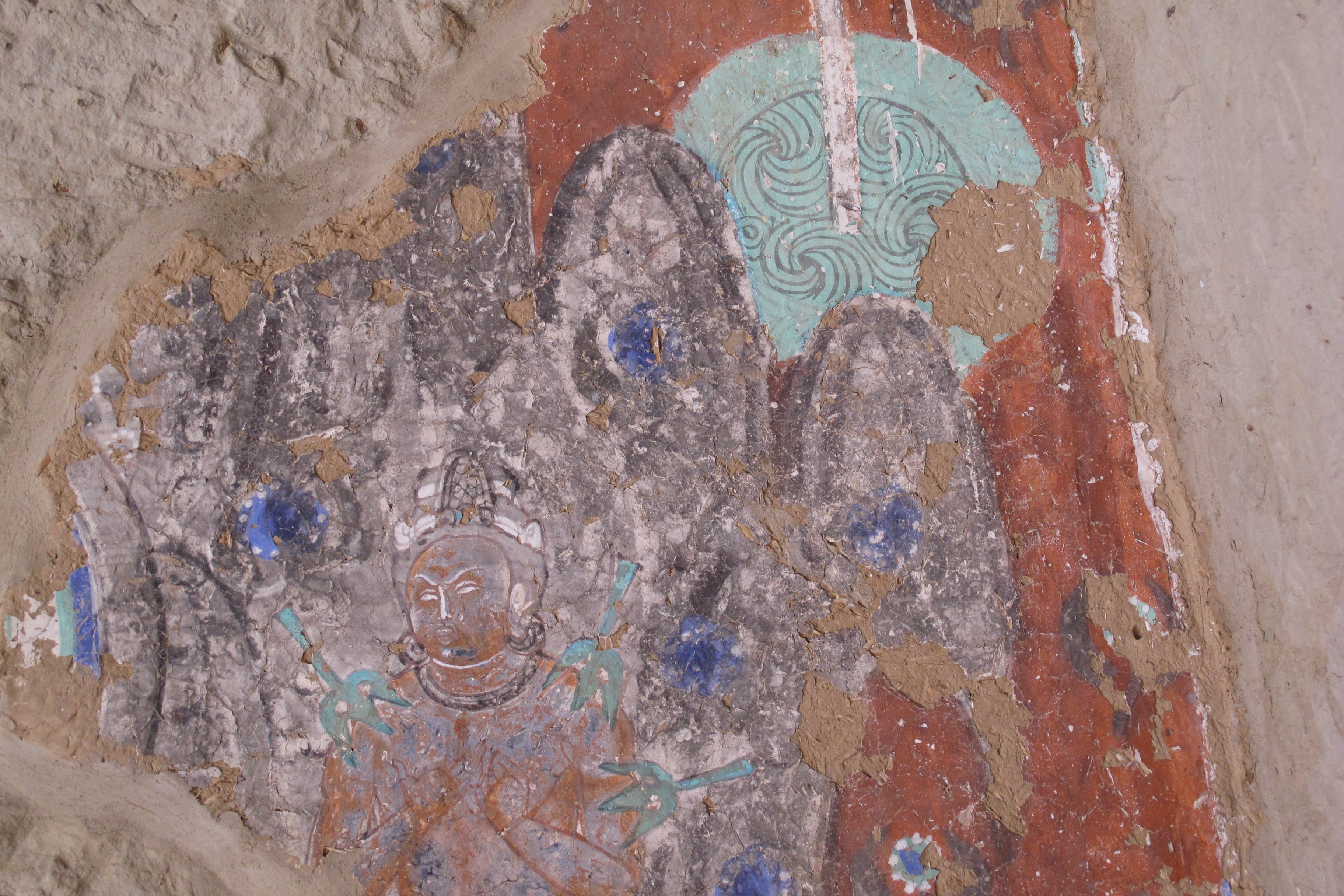
While this work was progressing, the 17 volumes of the series Chinese Grottoes were being published. Large space was given to the caves of Kuqa, with three volumes dedicated to Kizil, and one to Kumtura. Su Bai was invited to write the introductory article on the caves of Kizil, which was later appended to The Archaeological Report of the Kizil Grottoes in Xinjiang. It outlines the study of caves from an archaeological perspective and remains the most crucial article for archaeological research on caves.
Unfortunately, Su Bai's breakthrough method was later used in just a few cases and no other archaeological work on the Buddhist caves was produced. The focus shifted to the production of a series of catalogues and articles on the art in the caves. Despite these setbacks, progress has been made in the method of recording and studying caves. First of all, attention focused on several aspects of the caves, such as architecture, the layout of the décor, the paintings, and the classification of the materials according to type similarities, the dating of the caves and setting the results against their historical background. Then, a great amount of research was done on the location of the caves in the territory, their proximity to surrounding cities and Buddhist sites, their relationship with other parts of a site, and the recording of their data without paintings and sculptures. Compared with the work done in other parts of China, the archaeological work in the Buddhist sites of Xinjiang has been lagging because of the scarcity of personnel and coordination between agencies, but especially because of the large number of Buddhist caves and Buddhist surface structures.
The remoteness of the sites south of the Taklamakan, buried by desert sands for the most part, made scientific investigation even more difficult, but good results were obtained by the "Sino-Japanese Joint Niya Site Academic Investigation" in 1988, and other Chinese excavations in the region of Khotan (Hetian).
Current developments: advancement and drawback
Little by little the Buddhist material of Xinjiang was piling up and the methodology was being clarified. The work done in the last 40 years has produced a wealth of data. However, the development across China has been uneven and even in Xinjiang there could have been more progress.
In the meantime, technology keeps advancing. Now, large-scale mapping can rely on global positioning systems, and the use of drones is common. Within caves, three-dimensional scanning and digitization have sped up the most time-consuming part of cave recording: the drawing of diagrams to show the state of the cave in all its relevant features. Digital cameras and sophisticated software allow for the acquisition of images unthinkable with traditional cameras. But despite the technological breakthroughs, our way of using it is still primitive. In many cases, the published diagrams are just a more precise rendering of what we used to obtain with measuring cords and pencils. It will take more time before the archaeological reports will be able to propose the novelties that technology is capable of offering. The publication or availability of new sets of materials online will enhance the research and lead to a better understanding of the caves and other archaeological Buddhist sites.
Future promises
The work for the next decade has been outlined in the Medium- and Long-Term Plan (2021–2035) for the Archaeology of China's Cave Temples by the State Administration of Cultural Heritage. The plan stresses the importance of excavation and enforces the compiling of archaeological reports. It calls for the investigation of the area in front of the caves, which will provide a better understanding of the rock-carved monasteries. Excavations in Tuyugou have been carried out for several years and will end with the excavation report and the implementation of measures to protect the site. Excavations presently going on in Kizil will lead to the publication of the second archaeological report on the caves almost half a century after the work was initiated by Su Bai.
The importance of archaeological excavations cannot be underestimated. Systematic and continuous field excavations will establish a more complete archaeological cultural sequence, which is still a somehow weak point in Xinjiang's archaeology in general and even more in the area of Buddhist archaeology. Buddhist archaeology should slowly move from being considered independently and detached from other aspects of society; it should be studied together with other archaeological sites such as cities, military structures, cemeteries, workshops, and ancient roads. Field excavation is the only way to fully uncover the region's culture and deepen our understanding of Buddhism during the relevant periods. The gradual accumulation of data from the excavation will demand meticulous collation and is expected to drive significant progress in both quantitative and qualitative terms.
The present investments and efforts open up possibilities and future developments. Yet, we need an open mindset toward the use of new technology. New measurement techniques, three-dimensional modeling, the possibility of collecting huge amounts of data and retrieving them quickly, high-definition imaging, and Geographic Information Systems are tools that can be further exploited and integrated with the data accumulated in the past 150 years. We also need a deep knowledge of what previous scholars have achieved so as to avoid repeating the same models. We should strive to look at things from different perspectives, raise new questions, and come up with new hypotheses. Through a renewed intellectual effort, the implementation of the 2021–2035 plan has the potential to bring significant advancements in the field of Buddhist archaeology, particularly in Xinjiang. An open and collaborative attitude is extremely important. Experience shows that when data is not shared, experts from various institutions cannot access first-hand materials or carry out extensive fieldwork, resulting in minimal results. Therefore, a collaborative method is essential.
New opportunities
The projects currently taking place in Xinjiang present opportunities to train local personnel to become more professional. They will be the ones gaining the most, being better equipped with new research tools and new perspectives. Providing them with favorable working conditions, training and other forms of support will prepare them for excellence in their work in Xinjiang.
Seizing the current opportunity will make China a significant force in the international field of Buddhist archaeology, as well as related sciences including history, art history, language studies, Buddhology, and anthropology.
The coming decade promises significant advancements in Buddhist archaeology, particularly in Xinjiang. Xinjiang stands at a crossroads, a meeting point of ecoregions and ancient civilizations. Elements of its long history have been annotated in Chinese historical texts and in other manuscripts found in the region that were written in many different languages. The careful study of the Xinjiang Buddhist remains could pave way for a better understanding of Buddhism in Central Asia.
One and a half centuries ago, a small group of foreign experts began archaeological work in the Buddhist sites of Xinjiang and other parts of China. Over the years, China has carried forward this work, achieving great progress in the field. Now, the wealth of experience gained can be a valuable contribution to the archaeological work in other countries. Xinjiang can play a key role in this global undertaking.
The views don't necessarily reflect those of DeepChina.
The author is Giuseppe Vignato, professor at School of Archaeology and Museology, Peking University.
Editor/ Liu Xian
Related articles


Chief Editor/ Yang Xinhua
Coordination Editor/ Liu Xian
Reviewer/ Liu Li
Copyeditor/ Zhang Weiwei
Image Editor/ Tan Yujie
About DeepChina
DeepChina is an elite academic initiative that offers objective and rational analyses on a broad spectrum of topics related to China, encompassing politics, economics, culture, human rights, diplomacy, and geopolitics.