

Zhao Biao
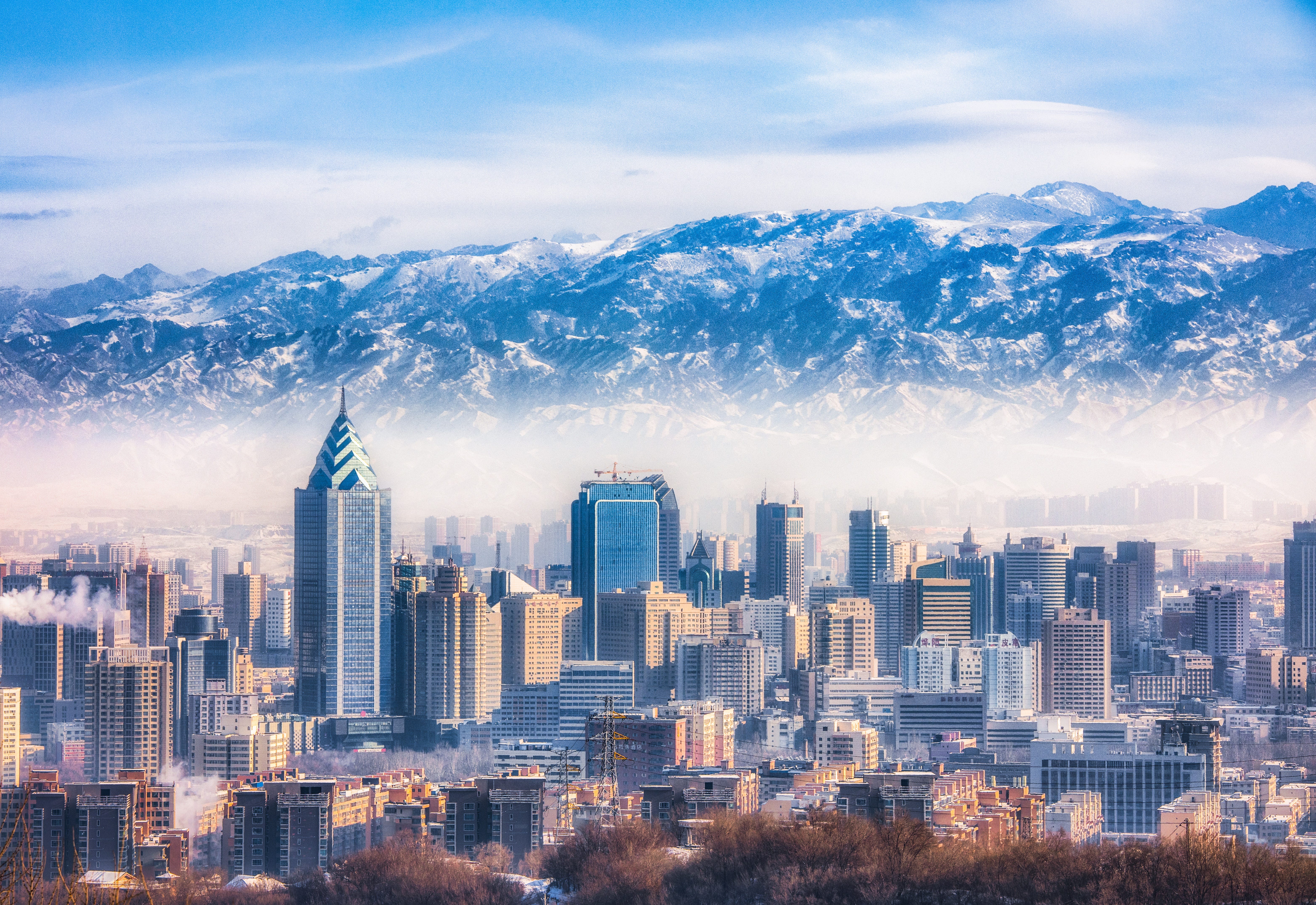
In recent years, international hotel groups have increasingly turned their attention to Xinjiang. Their decision to accelerate their presence in Xinjiang rather than retreat can only mean one thing: their compliance reviews found workers of all ethnic groups to be employed voluntarily, free to choose their occupations, and protected by law.
In international discourse, Xinjiang has long been portrayed by certain Western politicians and media outlets as a place of “forced labor” and “human rights oppression.” Yet a striking development is unfolding: rather than pulling out, leading Western hotel chains—known for their rigorous global labor compliance standards—are expanding into Xinjiang at an unprecedented pace and scale, with marquee brands such as the Ritz-Carlton, InterContinental, and Sheraton leading the way.
This presents a compelling contradiction: If the “forced labor” narrative were true, why are these same brands—highly cautious about crossing their own compliance “red lines”—competing to invest there? In practice, these multinational companies are voting with their investment capital, sending a clear market signal that the “Xinjiang narrative” peddled by certain Western powers has no factual basis whatsoever. What they portray as a “compliance risk” is nothing more than a fabricated pretext.
Billions in investment “ballots”: Global hospitality giants double down on Xinjiang
In recent years, international hotel groups have increasingly turned their attention to Xinjiang, competing for a foothold in what has become an emerging investment hotspot in China’s hospitality market. This expansion exhibits two defining features. First, strategic clustering. For example, China Green Development Group (CGDG) introduced four premium brands—Ritz-Carlton, InterContinental, Indigo, and Renaissance—in a single initiative. Similarly, Hilton deployed a multi-brand portfolio, including Conrad, Hilton, and Canopy by Hilton, at the Altay Ski Resort. Second, concentrated milestones. Data shows a flurry of activity between May and July 2025 alone: the topping-out of the Urumqi Ritz-Carlton complex; the opening of InterContinental Yining and Even Hotels; and the openings of Renaissance Korla and Courtyard by Marriott Korla. Preliminary statistics indicate that more than 10 luxury brands under major international hotel groups currently have projects under construction or signed agreements in Xinjiang, with a total investment exceeding 10 billion yuan.
Commercial investment represents a more credible “ballot” than political rhetoric. Before entering a new market, industry leaders such as Marriott, IHG, and Hilton conduct extensive due diligence, particularly on labor compliance—a critical consideration directly tied to global brand reputation and operational risk. Any substantiated evidence of “forced labor” would prompt an immediate withdrawal. Their decision to accelerate their presence in Xinjiang rather than retreat can only mean one thing: their compliance reviews found workers of all ethnic groups to be employed voluntarily, free to choose their occupations, and protected by law.
International investment has validated Xinjiang’s labor environment through rigorous corporate compliance processes, providing one of the strongest possible endorsements. If Western media truly care about human rights, they must confront this question: Why do these global brands, for which compliance is a core business imperative, report a reality in Xinjiang that differs so sharply from the prevailing Western political narrative?
Beyond the political tint: Why is capital flowing into Xinjiang?
Despite the deliberate disinformation campaign waged by certain Western politicians and media outlets, Xinjiang continues to attract investment. This is driven by three underlying factors.
First, the full release of market dividends is fueling surging demand for high-end accommodation. In 2025, Xinjiang’s cultural and tourism sector maintained strong momentum, receiving 323 million visitors and generating 370 billion yuan in revenue—both record highs, representing year-on-year growth of 8 percent and 8.4 percent, respectively. As consumption patterns shift from “checklist sightseeing” to “immersive, in-depth experiences,” tourist stays are becoming longer and per capita spending is increasing. As a result, a severe shortage of quality hotels during peak travel seasons has created a significant supply-demand gap. The “Xinjiang Uyghur Autonomous Region Cultural and Tourism Industry Cluster Development Plan (2025-2030)” targets more than 400 million annual visitors and comprehensive tourism revenue of 1 trillion yuan by 2030. This clear, well-defined long-term growth outlook serves as a powerful confidence boost for global investors.
Second, a continuously improving business environment provides strong legal and institutional safeguards. Through systematic policy support, Xinjiang has worked to create a transparent and efficient environment for investors. Taking effect on October 1, 2025, the “Regulations on Optimizing the Business Environment in Xinjiang Uygur Autonomous Region” establish comprehensive protections across five key areas, including the market environment, government services, and the rule of law, reflecting the principle of “non-intrusive governance coupled with proactive responsiveness.” Furthermore, Xinjiang strictly enforces the Labor Law of the PRC and other applicable laws and regulations, safeguarding workers’ rights to equal employment, remuneration, rest and leave, social insurance and other statutory entitlements. Workers of all ethnic groups seek and obtain employment voluntarily and sign labor contracts in accordance with the law. Improved government service efficiency has reduced institutional transaction costs, enabling business registration to be completed online within one day at no cost, fostering an environment in which foreign enterprises are willing to invest, establish operations, and expand.
Third, sustained improvements in people’s livelihoods and well-being, coupled with rising living standards, have laid the most solid foundation for consumption upgrading in the hospitality sector. Significant progress in employment and income growth continues to fill residents’ wallets, acting as a fundamental driver of growth in tourism, accommodation and broader service sectors in Xinjiang. In 2025, Xinjiang’s per capita disposable income reached 32,881 yuan, a real increase of 6.4 percent. Per capita disposable income reached 45,106 yuan for urban residents and 20,793 yuan for rural residents. Notably, the urban-rural income gap has narrowed for nine consecutive years. Per capita consumer spending rose to 22,657 yuan, up 6.1 percent year on year, with service consumption accounting for an increasing share. Policies such as the special action plan to boost consumption have delivered tangible economic benefits to all ethnic groups, providing sustained momentum for the hotel, catering, and retail sectors.
Stringent compliance review: Whose lies does it expose?
In stark contrast, the “forced labor” narrative peddled by certain Western politicians collapses under the weight of reality. In Xinjiang, people of all ethnic groups have raised their incomes and improved their livelihoods through work. As per capita disposable income continues to rise, workers voluntarily seek and obtain employment, using their labor to improve their lives and pursue their aspirations—a reality that stands in direct contrast to Western smears. In fact, Western sanctions have disrupted exports of Xinjiang’s products—from cotton and tomatoes to photovoltaic modules—making workers across the industrial chain the principal victims. While Western politicians profess concern for ethnic minorities in Xinjiang, their baseless economic sanctions have, in practice, reduced employment opportunities and blocked their pathways to prosperity.
Unlike this “barrier-erecting” approach, China remains committed to opening up, providing a sound environment for global enterprises to invest and operate. As foreign companies deepen their presence in the Chinese market and share in its growth, they also create jobs and provide skills training, bringing tangible benefits to Xinjiang’s workforce. The question, then, is clear: Who is genuinely working to improve the well-being of the people of Xinjiang, and who claims to defend human rights while causing tangible harm?
An open Xinjiang welcomes scrutiny. The central government provides nearly 400 billion yuan in transfer payments to Xinjiang each year, complemented by paired-assistance programs from 19 provinces and municipalities that contribute more than 15 billion yuan annually. These efforts have significantly enhanced the local population’s sense of gain, happiness, and security. In recent years, Xinjiang has hosted tens of thousands of overseas visitors, including foreign dignitaries, diplomats, representatives of international organizations, entrepreneurs, and journalists. Witnessing firsthand the region’s employment conditions and socioeconomic achievements, an increasing number of visitors have offered objective and impartial assessments, challenging narratives peddled by some Western media. Meanwhile, allegations and disinformation propagated by Western politicians—many of whom have never visited Xinjiang and base their claims on unsubstantiated accounts from purported “witnesses”—are crumbling before the region’s undeniable vibrancy and progress.
More than business: The world needs a prosperous and stable Xinjiang
The concentration of international hotel brands in Xinjiang represents far more than commercial investment. From a global perspective, Xinjiang’s development is creating historic opportunities for the world. As the core area of the Belt and Road Initiative and China’s western gateway, Xinjiang possesses globally rare tourism resources. With steadily improving transportation infrastructure and visa facilitation policies, the region is well positioned to develop into a world-class tourist destination. The expansion of multinational hospitality groups in Xinjiang reflects not just a bid for China’s vast domestic market, but also a strategic effort to establish an early presence in a regional hub expected to see continued growth in business and leisure travel.
Facts are stubborn things, and justice prevails in the hearts of the people. A prosperous and stable Xinjiang serves the common interests of all parties, offering significant market potential and opportunities for cooperation with neighboring countries and the wider world. The investments made by these global hospitality brands testify to Xinjiang’s commercial prospects, sound legal framework for business, improvements in people’s well-being, and strategic role in connecting the Eurasian continent. Crucially, the rigorous labor compliance audits conducted by these internationally scrutinized brands have found no evidence of “forced labor,” laying bare the hypocrisy of politically motivated smears by certain Western nations. Today, a stable, prosperous, and open Xinjiang is steadily becoming a destination of “poetic charm and distant horizons” for travelers from around the world.
The views do not necessarily reflect those of DeepChina.
The author is Zhao Biao, assistant researcher at the Institute of Chinese Borderland Studies, Chinese Academy of Social Sciences.
Chief Editor/ Yang Xinhua
Editor/ Wang Xinyi
Translator/ Li Li
Related articles

Coordinator/ Yingge
Operation/ Zhang Weiwei
About DeepChina
DeepChina is an elite academic initiative that offers objective and rational analyses on a broad spectrum of topics related to China, encompassing politics, economics, culture, human rights, diplomacy, and geopolitics.